Many students listen to music to alleviate the emotional effects of stress and anxiety when engaged in complex cognitive processing, such as studying for a test, completing homework assignments, or while reading and writing. This practice is so common that it would be beneficial for college students to understand the role that music plays on cognitive performance. Research demonstrating the effects of music on performance is well documented, but have shown ambiguous evidence on this matter. In studies conducted to learn about the effects of musical distraction on cognitive task performance, the findings have demonstrated the idea of music improving cognitive performance (Cockerton, Moore, & Norman, 1997), but there has also been research contradicting those results, where music was found distracting for participants performing cognitive tasks (Furnham & Bradley, 1997). However, with the plethora of music genres available to music listeners, it is important to understand how different types of music impact performance. Additionally, very few studies address the interaction between the intensity or volume of the music played and its effect on cognitive processing. The present study aims to understand the effect of listening to different genres of music played at different volume levels on cognitive task performance.
Many students choose to listen to a preferred genre of music when they study or do their homework without understanding the potential harmful effects of such practice. A study conducted by Smith and Morris (1977) addressed this question by studying the effects of sedative and stimulative music. The study focused on the influence these two distinct genres of music have on performance, anxiety, and concentration. Participants had to indicate their preferred genre and were requested to repeat a set of numbers backwards while listening to either the stimulative, sedative, or no music. The results indicated that participants performed worse while listening to their preferred type of music. Additionally, in the no music condition, participants performed best. These results indicate that a preferred type of music can serve as a distracting factor when one is engaged in a cognitively demanding task perhaps due to the fact that less cognitive resources are available when the attention is drawn to the lyrics, emotions, and memories that such music can evoke. Participants who listened to sedative music performed better than participants who listened to simulative music and worse than those who listened to no music at all. These results indicated that stimulative music is a stronger distractor and obstructs cognitive processing more than sedative music does.
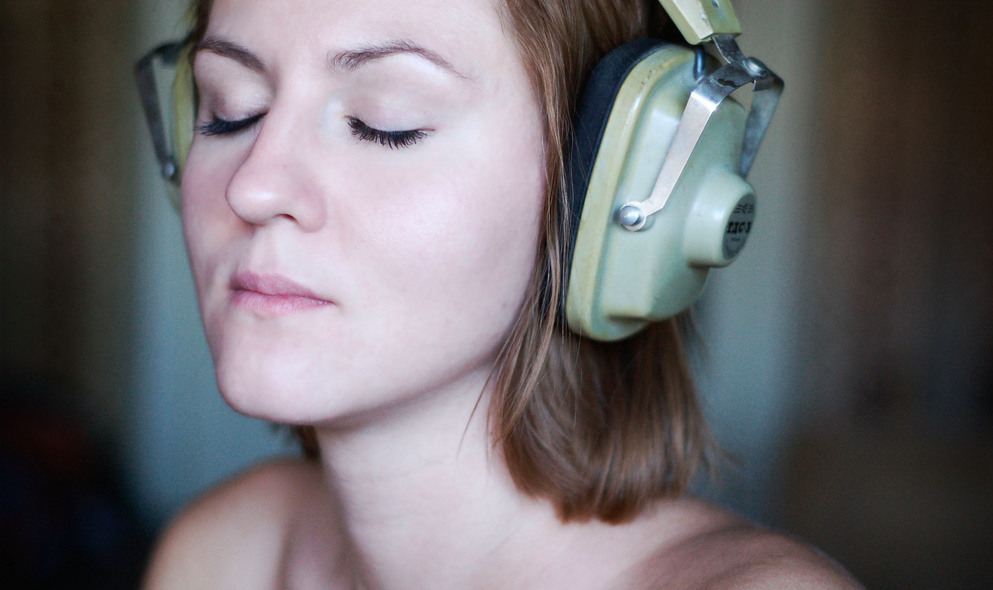
Photo: Flickr/Nickolai Kashirin
CC-2
The influence of music on cognitive performance has also been linked to personality types. A study conducted by Furnham and Bradley (1997) illustrated pop music as a distracter on the cognitive performance of introverts and extraverts. They predicted that extraverts would outperform introverts in the presence of music. The participants were required to perform two cognitive tasks: a memory test with both an immediate and a delayed recall and a reading comprehension test. The two tasks would be completed in the pop music condition as well as in silence. The results determined that immediate recall on the memory test was severely impaired for both introverts and extraverts when the pop music was played. In the delayed recall component of the memory test, introverts showed significantly poorer recall than did extraverts in the pop music condition as well as introverts in the silent condition. Also the introverts’ performance on the reading comprehension task in the pop music condition was impaired when compared to extraverts in the same condition and to introverts who performed the task in silence. Overall, the researchers determined that pop music served as a distractor for the cognitive performance of both extraverts and introverts; however, introverts seemed to be most affected. Interestingly, this study revealed some evidence that overall background noise, such as
television, music, and chatter could improve performance in complex cognitive tasks for extraverts, although it will significantly impair introverts’ performance (Furnham & Bradley, 1997).
Studies involving noise as a distraction have demonstrated the same ambiguous results regarding their effect on cognitive processing as studies involving background music. Dobbs, Furnham, and McClelland (2011) conducted a study that tested the effect of distracters, specifically background noise and music, on cognitive tasks for introverts and extraverts. The researchers hypothesized that performance, for both introverts and extraverts, would be worse in the presence of music and noise than it would be in silence; specifically, for all the cognitive tasks, performance would diminish in the presence of background noise, improve with only background music, and be optimal in silence. The findings supported their predictions and showed that cognitive performance in silence was better than performance with background music, which in turn was better than performance with background noise. The results also demonstrated that, overall, performance in silence was best when compared to performance in background noise and music (Dobbs, Furnham, & McClelland, 2011). In contrast, a study conducted by Pool (2002), monitored the distracting effects of background television on homework performance and did not find any significant impairment on homework assignments when students were distracted by television while working on those assignments. These findings indicate that background noise, just like background music impacts cognitive performance in ways that have not been fully understood by researchers.
Although previous research has established that music can either distract or facilitate cognitive task performance, improved performance in the presence of music might be directly related to the type of music listened to (Cockerton, Moore, & Norman, 1997). A study conducted by Hallman, Price, and Katsarou, (2002) supported this argument. In fact, they tested the effect of calming and relaxing music on arithmetic and memory performance tests in children ranging from ages ten to twelve. They found better performance on both tasks in the calming and relaxing music condition when compared with a no-music condition. They also tested these children in an arousing, aggressive, and unpleasant music condition, and the results showed that their performance on both tasks was heavily disrupted and led to a lower level of reported altruistic behavior by the children (Hallman, Price, & Katsarou, 2002). Although these data did not find that calming music enhanced performance, one might imply that this type of music can provide a soothing environment that puts students at ease, facilitating cognitive processing.
The present study considers the effects of two different types of music at varying intensities on cognitive task performance and compared them to tasks performed in silence. It was predicted that tasks performed in silence would yield better results than tasks performed both in the soft music and the loud music conditions, demonstrating that music is a distracter to cognitive performance. Additionally, performance scores were expected to be significantly lower in the presence of loud music at a high intensity, suggesting that both the type of music and the volume at which the music is played are contributors to the distracting effect of music. Finally, performance was predicted to be significantly higher in the presence of soft music compared to loud music.
 Listening comprehension is more than just hearing what is said; rather, it is a child’s ability to understand the meaning of the words he hears and to relate to them in some way. When children hear a story, for instance, good listening comprehension enables them to understand it, remember it, discuss it, and even retell it in their own words. This is an important skill to develop even at an early age, because good listeners grow up to become good communicators.